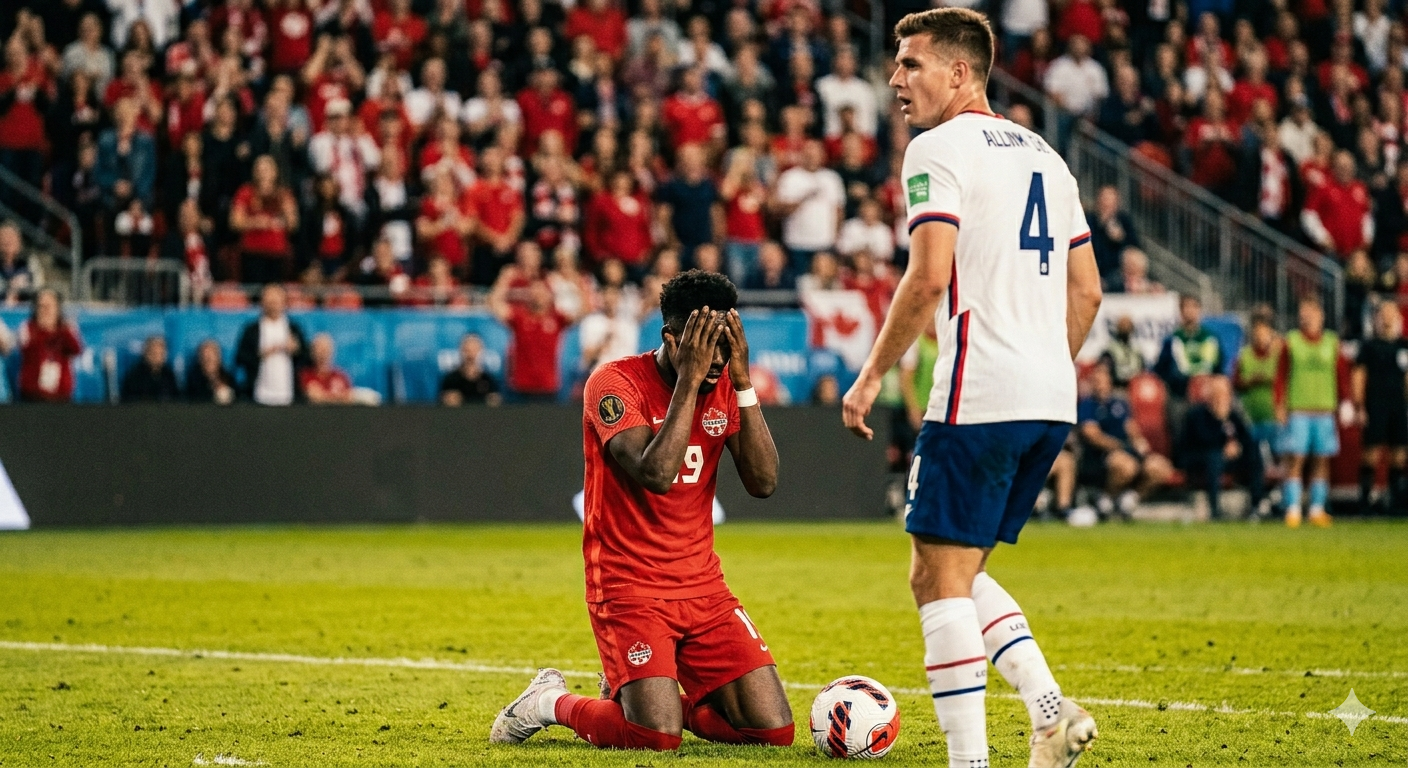
The immense psychological weight of hosting a global tournament has arrived. On matchday two, North America experienced two completely contrasting footballing realities. At BMO Field in Toronto, Canada found themselves trapped in a frustrating 1-1 draw against a disciplined Bosnia and Herzegovina side. Meanwhile, at the Los Angeles Stadium, the United States made an explosive statement, dismantling Paraguay in a clinical 4-1 display.
Mainstream commentary will focus heavily on the emotional highs and lows of the home crowds. However, looking at these matches through a structural lens reveals a deeper truth: in an expanded tournament model where goal difference determines passage through the group-stage matrix, an emotional home crowd becomes a tactical trap if panic overrides structural discipline.
Canada’s Lateral Trap: Choked in the Half-Spaces
Jesse Marsch’s Canada stepped onto the pitch looking to use high-energy, vertical transitions to ignite the home stadium. Bosnia and Herzegovina, however, arrived with a perfectly drilled mid-block defensive structure designed to completely neutralize that speed.
Instead of engaging Canada in an open, end-to-end match, the European side compressed the vertical space between their defensive and midfield lines. This spatial choking forced Canada’s primary outlets, including Alphonso Davies, into incredibly predictable lateral patterns.

- The Half-Space Double-Team: Bosnia consistently dropped an extra midfielder into the half-spaces to double-team Canadian wingers the moment they turned inward, rendering their traditional under-lapping runs useless.
- Forced Horizontal Circulation: Cut off from the center of the pitch, Canada fell into a possession trap, moving the ball sideways across the backline without ever unbalancing the opposition’s defensive shape.
- The Rest-Defense Collapse: Desperate to satisfy an impatient home crowd, Canada committed too many bodies forward late in the match. Bosnia capitalized instantly, executing a long-ball counter-attack to split Canada’s exposed center-backs and open the scoring.
While Canada showed immense resilience to scratch out a 1-1 equalizer late in the game, the match served as a stark warning: chasing an emotional win without structural protection is a high-risk strategy.
The USMNT’s Vertical Engine: Deep Bait and Midfield Manipulation
In sharp contrast to the tactical paralysis seen in Toronto, the United States provided a blueprint for breaking down stubborn, physical opposition. Facing an aggressive Paraguay side known for structural compactness, the USMNT’s initial phases looked exceptionally patient, entering the halftime break locked in a tight stalemate.
The second half, however, was an absolute masterclass in pulling a defensive unit out of alignment.
- Deep Positional Baiting: Rather than forcing the ball directly into a crowded final third, the American deep-lying midfielders deliberately dropped into low-risk zones near their own center-backs. This subtle shift forced Paraguay’s defensive lines to step forward and engage.
- Exploiting the Lines: The moment Paraguay’s center-backs pulled out of alignment to close the gap, the USMNT unleashed rapid, vertical passes into the vacated space directly behind them.
- Squad Resource Management: Once the structural cracks appeared, the Americans made full use of a 26-man roster. A wave of early second-half substitutions allowed the host nation to maintain a relentless attacking pace against an increasingly fatigued Paraguayan backline, rattling off three goals in the final thirty minutes.

The Tournament Matrix Impact
Following these opening results, the group dynamics are taking shape exactly as the expanded layout dictates:
- Group D Control: The United States sits comfortably at the summit of their bracket. Their healthy +3 goal margin gives them an elite cushion heading into matchday two, drastically reducing the mathematical pressure on their upcoming fixtures.
- Group B Jeopardy: Canada faces an uphill battle. With only a single point and a neutral goal difference, their upcoming fixture is no longer just about winning; it is about finding a way to generate attacking volume without exposing their defensive lines to transition.
The early trend of this summer campaign is clear. The teams finding success are the ones operating with cold efficiency, using structural patience to wear down opponents rather than relying on raw emotion or chaotic energy.
Over to You: Did the USMNT uncover the ultimate blueprint for cracking aggressive South American mid-blocks, or did Paraguay simply expose their own lack of defensive depth late in the second half? Concurrently, how should Canada alter their wide rotations in matchday two to prevent getting trapped laterally? Drop your deep tactical breakdowns below!

Leave a Reply