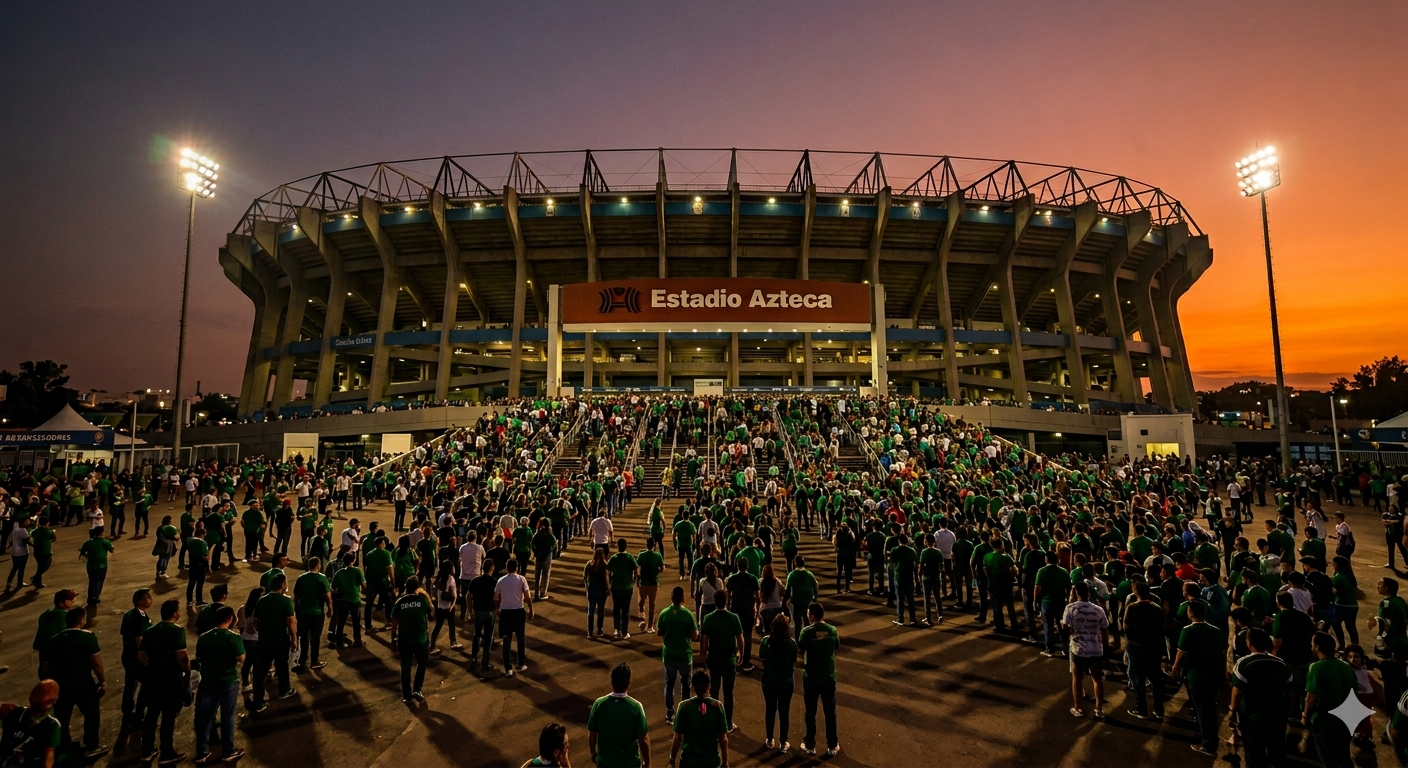
The theory behind the newly constructed international tournament model didn’t take long to manifest on the grass. On opening night at the iconic Mexico City Stadium, co-hosts Mexico secured a grueling 2-0 victory over South Africa in front of an electric home crowd. Hours later at the Guadalajara Stadium, South Korea fought their way to a narrow 2-1 win over Czechia to wrap up a fascinating first matchday for Group A.
Mainstream analysis will inevitably obsess over the chaotic disciplinary record of the opening fixture—which featured a striking three red cards. However, looking at these matches through a structural lens reveals that this physical friction is a direct byproduct of the tournament’s expanded structure. When goal difference across 12 groups serves as a definitive threshold for progression, teams play with an intensity rarely seen this early in summer campaigns.
Opening Match: Mexico 2-0 South Africa
Javier Aguirre’s side wasted no time implementing an aggressive blueprint, testing the South African defensive shape within the opening minutes. The initial pressure bore fruit in the 8th minute when midfield recovery work allowed Julián Quiñones to smash a low strike past Ronwen Williams to claim the opening goal of the tournament.

While Mexico controlled large stretches of the opening half, hitting the woodwork during sustained periods of dominance, the true tactical narrative unfolded after the break. In the 49th minute, South African midfielder Yaya Sithole was dismissed following an aggressive challenge on a racing Raúl Jiménez.
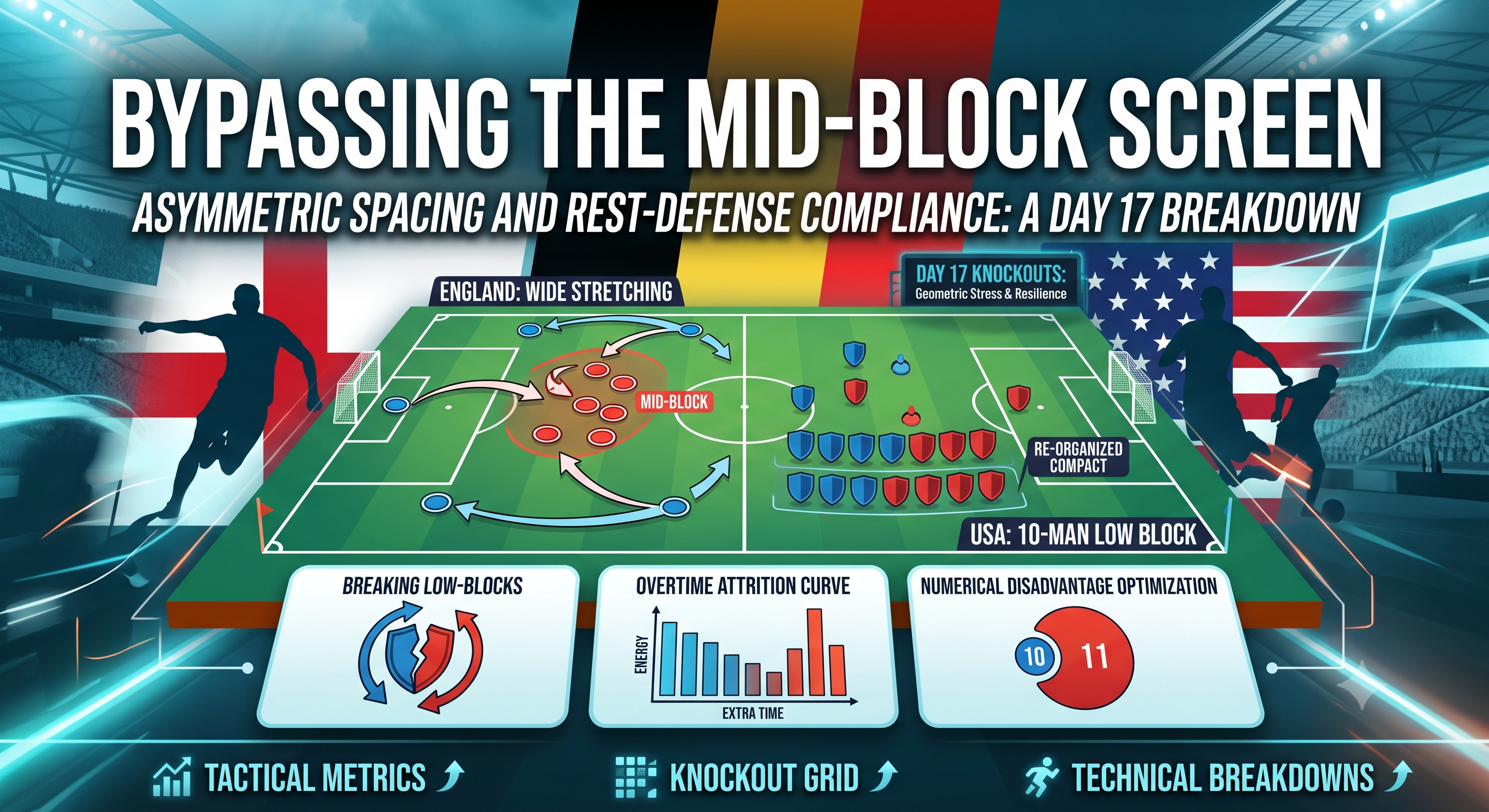
Down to 10 men, South Africa immediately dropped into a low block to prevent structural collapse. To crack this system, Aguirre shifted his tactics, using fullbacks to maximize the pitch width and stretch South Africa’s compact lines. He subbed on 17-year-old midfield talent Gilberto Mora, who immediately occupied dangerous pockets in the half-spaces to disrupt the opposition’s defensive orientation.
Knowing that group stage seeding relies heavily on overall goal difference, Mexico pushed relentlessly for a substantial margin rather than comfortably passing the ball around. Within a minute of the tactical adjustment, Roberto Alvarado delivered a cross that Jiménez nodded home in the 66th minute to make it 2-0.

Even when reduced to nine men following Themba Zwane’s 83rd-minute dismissal, South Africa refused to completely capitulate. They fought tenaciously to preserve the 2-0 scoreline. In this expanded format, a 2-0 defeat keeps qualification pathways realistic via the third-place ladder, whereas a late 3-0 or 4-0 collapse can ruin an entire campaign before matchday two. The subsequent stoppage-time red card for Mexico’s César Montes highlighted the unyielding tension gripping both camps until the final whistle.
Second Match: South Korea 2-1 Czechia
The second Group A match in Guadalajara perfectly mirrored the tactical desperation of the opener. South Korea and Czechia played out a cautious, scoreless first half, with both sides visibly hesitant to commit structural errors early.
The match exploded into life after the interval. Czechia found a structural breakthrough in the 58th minute when Ladislav Krejčí found the net, forcing South Korea to alter their mid-block approach. The response from the sidelines was immediate and aggressive; South Korea committed more bodies into advanced wide positions to bypass Czechia’s defensive block.

The structural adjustment paid off rapidly. Hwang In-beom leveled the score in the 66th minute, before striker Oh Hyeon-gyu converted an incisive low cross in the 79th minute to secure a vital 2-1 advantage for the Asian nation.
The final ten minutes provided a textbook look at the qualification matrix in practice. Czechia threw bodies forward in a high-risk search for an equalizer, well aware that even a single point drastically shifts conversion metrics in a competitive qualification climate. South Korea, conversely, dropped into an ultra-dense block, with Lee Gi-hyuk picking up a late tactical yellow card in the fifth minute of stoppage time to break up a dangerous transition and protect the three points.
The Group A Standings
The first round of fixtures has immediately split the group exactly as the new format dictates:
- Mexico: 3 Points (+2 Goal Difference)
- South Korea: 3 Points (+1 Goal Difference)
- Czechia: 0 Points (-1 Goal Difference)
- South Africa: 0 Points (-2 Goal Difference)

Mexico and South Korea sit in commanding positions, but their upcoming matches will require careful physical management given the heavy energy expenditure of the opener. For South Africa and Czechia, their upcoming head-to-head clash is no longer just about survival; it is about chasing an aggressive goal margin to challenge for a third-place ranking.
The Long-Term Energy View
The opening matchday confirms that teams are expending massive amounts of physical capital early. The three red cards at the Mexico City Stadium and the late-game sprints in Guadalajara suggest that coaches are prioritizing immediate group survival over long-term squad management.
While this creates incredible theater for fans, it plays directly into the hands of deeper, rest-defense-oriented squads waiting in other brackets. Teams that can win their opening fixtures efficiently without accumulating heavy card suspensions or physical fatigue are the ones best positioned to handle the grueling 8-match gauntlet. Burning through tactical and physical reserves in the opening week is an unsustainable strategy.
Over to You: Group A has given us immediate drama right out of the gate! With South Africa now missing two key players to red cards for their next outing, will they be forced to abandon their mid-block entirely against Czechia, or will they park an ultra-dense bus to safeguard their goal difference? Drop your precise tactical predictions in the comments below!
Leave a Reply